VinFast Home Charging Installation Guide 2026: 7.4 kW vs 11 kW Wallbox Setup, Electrical Code & Electricity Tariffs
A comprehensive technical handbook for installing a Level 2 AC home wallbox for VinFast electric vehicles. Covering single-phase (7.4 kW) vs three-phase (11 kW) configurations, dedicated circuit breaker sizing, earthing requirements, smart charging scheduling, and optimizing residential EVN tiered electricity tariffs.
Published: Oct 14, 2026•Updated: Oct 14, 2026
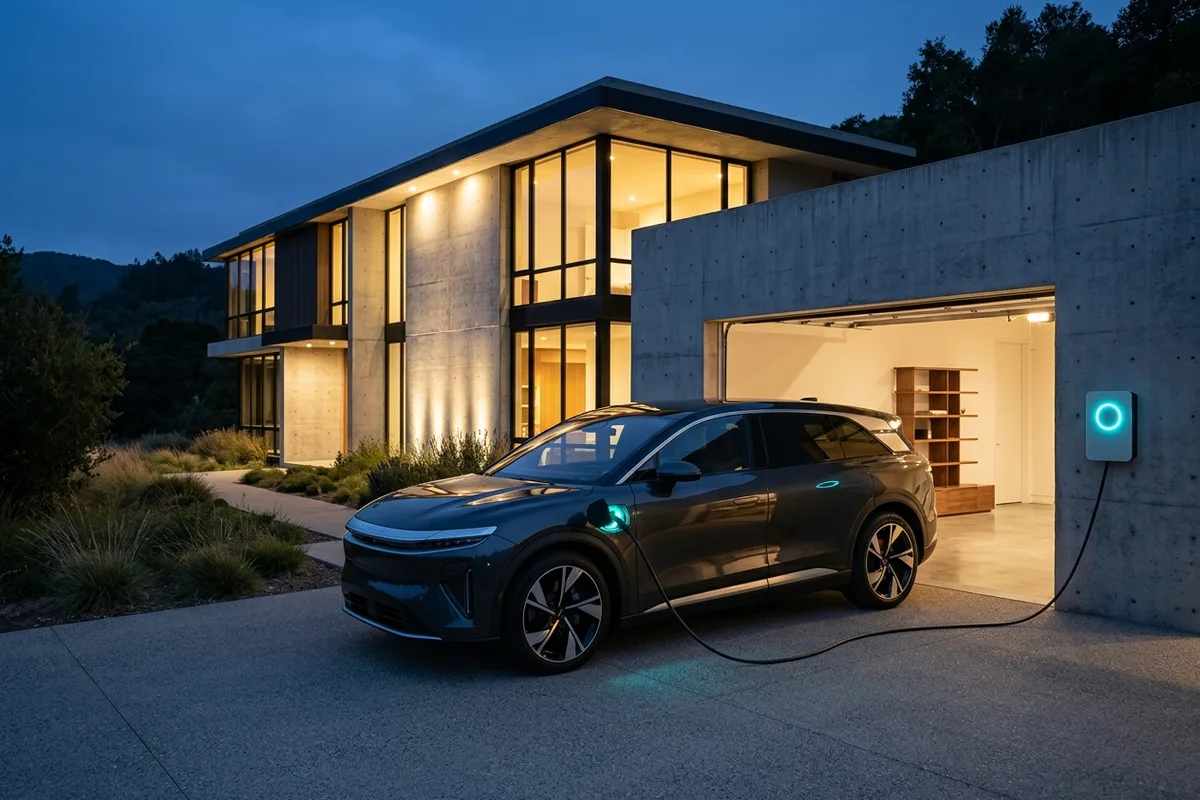
Home garage wallbox charger connected to a VinFast electric crossover with glowing status LED
Key Takeaways
- 7.4 kW vs 11 kW Distinction: Most single-phase residential grids support up to 7.4 kW (32A at 230V), adding ~35 to 45 km of range per hour of charge. A 3-phase 11 kW wallbox (16A per phase at 400V) boosts replenishment to ~55 to 65 km/h, fully topping up an 87.7 kWh VinFast VF 8 overnight in ~8.5 hours.
- Electrical Infrastructure Standards: Installation requires a dedicated 40A (for 7.4 kW) or 20A 3-pole (for 11 kW) Type B RCBO (residual current breaker with overload protection) with Type A + 6mA DC residual detection, plus a verified low-impedance ground rod (<10 Ohms).
- Cost Comparison: Home AC charging in Vietnam under EVN Tier 4/5 electricity tariffs averages ~2,800 to 3,100 VND/kWh ($0.11 to $0.12/kWh), costing roughly 55,000 to 80,000 VND ($2.20 to $3.20 USD) per 100 km—nearly 70% cheaper than public fast charging and 75% cheaper than gasoline. Calculate exact regional costs with our On-Road Cost & Savings Estimator.
- Smart Scheduling & Off-Peak Savings: Using the VinFast App or vehicle infotainment, owners can schedule overnight charging during off-peak hours (e.g. 10 PM to 6 AM) to reduce grid strain, minimize ambient battery heat during high-temperature daytime, and extend battery pack longevity.
Why Home Level 2 Charging is the Foundation of EV Ownership
Over 80% of all electric vehicle charging globally occurs at home. While high-power public DC hubs like the V-GREEN Network are indispensable for cross-country highway road trips, relying exclusively on daily DC fast charging exposes battery cells to continuous electrochemical heat and thermal stress.
Installing a dedicated Level 2 AC wallbox in your garage or private parking bay delivers two decisive advantages: unbeatable convenience (waking up every morning with a "full tank") and optimal long-term battery preservation. Gentle AC charging at 7.4 kW or 11 kW operates well within the passive thermal comfort zone of both LFP and NMC battery chemistries, preventing premature state-of-health (SoH) degradation.
Selecting the Right Wallbox: 7.4 kW Single-Phase vs 11 kW Three-Phase
When choosing a home charging station, your home electrical supply infrastructure dictates the ideal setup:
• 7.4 kW Single-Phase (230V / 32A): This is the most common residential configuration in Vietnam, Europe, and urban townhouses. Drawing 32 amperes over a single phase, it replenishes 35 to 45 km of driving range per hour. An entry crossover like the VinFast VF 6 (59.6 kWh battery) charges from 20% to 80% in approximately 5 hours.
• 11 kW Three-Phase (400V / 16A per phase): If your property has a 3-phase commercial or residential grid drop, an 11 kW wallbox is the gold standard. Because each phase carries only 16A, it places less current strain per line while supplying balanced power. The VinFast VF 8 (87.7 kWh) or VinFast VF 9 (123 kWh) will recharge from 10% to 100% in ~8 to 11 hours overnight.
• North American 240V Split-Phase (NEMA 14-50 / Hardwired): In the United States and Canada, residential Level 2 charging utilizes split-phase 240V. A 32A plug-in station delivers 7.7 kW, while a 48A hardwired wallbox delivers 11.5 kW on a dedicated 60A circuit breaker.
Electrical Safety Codes, Earthing & Circuit Protection
EV charging draws high continuous current for multiple consecutive hours. Substandard wiring or undersized gauge wire creates severe fire and overheating risks. Professional installation must adhere to strict protocols:
1. Dedicated Circuit: Never tap an EV wallbox off an existing domestic ring circuit. Run a direct line from the main distribution panel.
2. RCBO Protection: Install an RCBO incorporating residual current protection capable of detecting smooth direct currents (DC residual current detection >= 6mA). This prevents a fault inside the vehicle's on-board rectifier from blinding upstream AC safety devices.
3. Low Grounding Resistance (<10 Ohms): VinFast vehicles feature sensitive onboard insulation monitors. If the earthing resistance exceeds 10 Ohms, the vehicle's on-board charger (OBC) will trigger an "Earth Fault" warning and refuse to draw current.
4. Surge Protective Device (SPD): In tropical regions prone to monsoon lightning strikes, a Type 2 Surge Protective Device (SPD) at the sub-panel protects both the wallbox and the vehicle's sensitive power electronics from catastrophic voltage spikes.
EVN Tiered Electricity Tariffs vs US Time-Of-Use (TOU) Rates
The financial return on a home wallbox depends on how you navigate electricity tariff structures:
• Vietnam EVN Domestic Tariffs: Electricity in Vietnam is billed on a progressive 6-tier ladder. Tier 5 (301–400 kWh) costs 3,055 VND/kWh and Tier 6 (401+ kWh) costs 3,151 VND/kWh (before 8% VAT). Charging a 75 kWh battery pack from empty to full adds roughly 250,000 VND ($10.00 USD) to the household electric bill—yielding an energy cost of only ~60,000 VND ($2.40 USD) per 100 km, compared to ~210,000 VND for a gasoline car. Explore your exact payback horizon with our On-Road Cost & Savings Estimator.
• Time-of-Use (TOU) Meters: In North America and commercial properties in Vietnam, electricity rates vary dramatically by time of day. Off-peak nighttime rates (midnight to 6:00 AM) can be up to 60% cheaper than peak afternoon rates. Hardwiring a smart wallbox with scheduling functionality lets you capture the lowest tariff tier automatically.
Smart Scheduling via VinFast App & Thermal Preconditioning
Modern VinFast vehicles allow owners to configure charging schedules through the central touchscreen or the VinFast mobile app. You can program the vehicle to initiate charging at 11:00 PM and terminate at 6:00 AM.
Furthermore, take advantage of Cabin & Battery Preconditioning while plugged in. By commanding the climate control system to cool or heat the cabin 15 minutes before your scheduled departure, the vehicle draws power directly from the grid wallbox rather than expending traction battery capacity—preserving 100% of your range for the road.
Final Editorial Verdict
VinFast Home Charging Installation Guide 2026
4.9/ 5.0
The Positives
- ✓Cuts ongoing fuel expenditure by over 70% compared to gasoline vehicles
- ✓Preserves battery health and cell longevity through gentle thermal cycles
- ✓Unmatched daily convenience with zero waiting time at public charging stations
The Trade-offs
- ✗Requires dedicated upfront installation cost and professional electrical inspection
- ✗Townhouse and apartment dwellers without private deeded parking face landlord/HOA approval hurdles
Bottom Line: A dedicated 7.4 kW or 11 kW home wallbox transforms the VinFast ownership experience from an errand into seamless background utility, cutting fuel expenses by over 70% while maximizing battery health.
Structured Data & Specifications Table
| Specification / Metric | Verified Specification | Data Source |
|---|---|---|
| Recommended Wallbox Capacity | 7.4 kW (Single-phase 230V / 32A) or 11 kW (3-phase 400V / 16A) | VinFast Home Charger Specs |
| Charging Speed (Range added per hour) | 7.4 kW: ~35–45 km/h | 11 kW: ~55–65 km/h | VinFast Engineering Benchmarks |
| Dedicated Breaker Requirement | 40A 2-pole (for 7.4 kW) | 20A 4-pole (for 11 kW) Type A + 6mA DC or Type B RCBO | IEC 61851-1 / National Electrical Code |
| Recommended Cable Cross-Section | Cu 6.0 mm² (for 7.4 kW up to 25m) | Cu 4 × 2.5 mm² + Ground (for 11 kW) | Electrical Code Installation Guide |
| Earthing Resistance Requirement | Grounding impedance strictly < 10 Ohms (to prevent OBC safety trips) | VinFast AC On-Board Charger Safety Protocol |
| Average Overnight Full Charge Cost (87.7 kWh) | ~175,000–245,000 VND ($7.00–$9.80 USD) under EVN domestic rates | EVN 2026 Tariff Breakdown |
Frequently Asked Questions
Q:Can I plug my VinFast into a standard 220V household wall outlet with the portable emergency charger?
Yes. VinFast provides a portable Level 1/2 emergency charger (often rated at 2.2 kW to 3.5 kW / 10A–16A). However, charging an 87.7 kWh VF 8 battery on a 2.2 kW outlet takes over 36 hours. A standard wall outlet should be reserved for emergency top-ups rather than primary daily replenishment.
Q:Does my home need a 3-phase electrical connection to charge a VinFast?
No. A standard single-phase 230V connection paired with a 7.4 kW (32A) wallbox is more than adequate for 90% of drivers, replenishing 250 to 300 km of driving range during a typical 7-hour overnight sleep.
Q:How does frequent home AC charging affect long-term battery degradation compared to DC fast charging?
AC charging is significantly gentler on lithium-ion battery cells. Because charging current is lower and temperature rises are modest, battery degradation is minimized. Automotive laboratory studies indicate vehicles charged predominantly on AC retain 3% to 5% higher State of Health (SoH) after 5 years compared to vehicles charged exclusively at 150 kW+ DC stations.
Tags:#Home Charging#Wallbox Installation#EV Charging#EVN Tariff#Level 2 Charging#VinFast VF 8#VinFast VF 6#VinFast VF 7

EV Tech & Charging Infrastructure Specialist
M.Sc. Electrical & Computer Engineering; Certified EV Powertrain & ADAS Systems Specialist
An automotive technology specialist from North America, Marcus breaks down smart connected software, autonomous driving features, and the next-generation charging networks powering modern EVs.
Related Stories & Analysis
Ownership & Buyer Guides
11 min readVinFast Car Prices in the US (2026 Lineup): From VF 3 to VF 9, Lease Deals & VFS Stock Overview
Reviews & Road Tests
11 min readWho Makes the VinFast VF 8? Origins, Battery Specs, US Pricing & Buyer Guide (2026)

Industry & Manufacturing
10 min read