LFP vs NMC Chemistry in VinFast Vehicles: Lifespan, Degradation & Daily Charging Rules
An engineering comparative analysis of Lithium Iron Phosphate (LFP) and Nickel Manganese Cobalt (NMC) chemistries across the VinFast lineup, detailing thermal stability, cycle longevity, degradation curves, and optimal charging habits.
Published: Oct 14, 2026•Updated: Oct 14, 2026
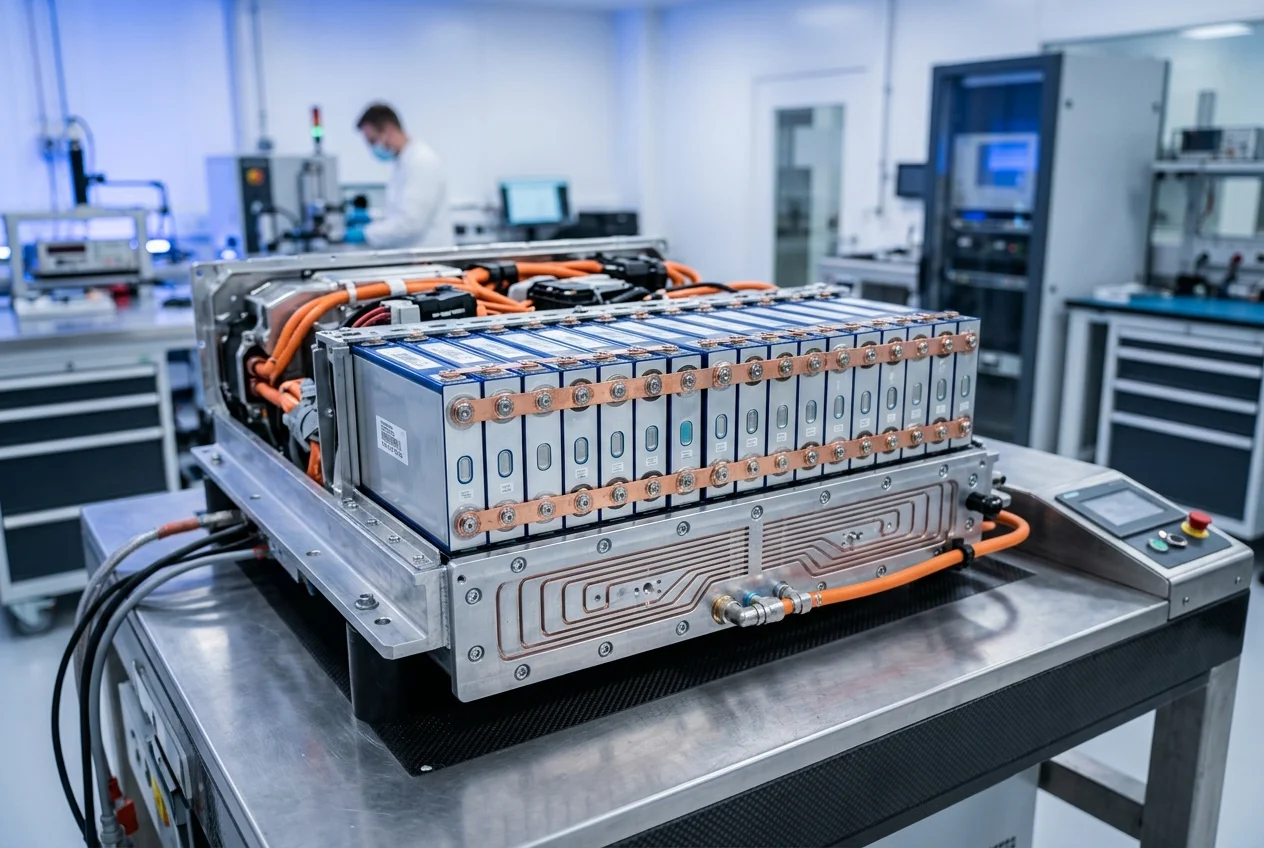
Electric vehicle battery cell engineering laboratory showing LFP and NMC cell modules
Key Takeaways
- Tailored Deployment: VinFast strategically equips urban runabouts (VF 3, VF 5, VF 6, Limo Green, e-scooters) with durable LFP cells, reserving high-energy NMC packs for long-range global crossovers (VF 7, VF 8, VF 9).
- Cycle Durability: LFP chemistry delivers 3,000 to 5,000 full charge-discharge cycles before dropping to 80% capacity (translating to 600,000+ km), compared to 1,500 to 2,000 cycles for ternary NMC.
- Daily Charging Contrast: LFP packs should be charged to 100% regularly to enable BMS cell voltage calibration. Conversely, NMC packs should be capped at 80% SoC for daily commuting to retard cathode oxidation.
- Thermal Resilience: LFP exhibits extraordinary thermal stability with decomposition temperatures exceeding 500°C (virtually zero thermal runaway risk), while NMC requires active liquid cooling loops during high-power 200kW+ DC fast charging.
Strategic Bifurcation: Why VinFast Uses Two Battery Chemistries
Rather than forcing a single battery chemistry across its entire lineup, VinFast employs a dual-sourcing architecture. Compact urban cars demand high cycle durability, low manufacturing cost, and ultimate fire safety, making Lithium Iron Phosphate (LFP) the ideal choice. Conversely, full-size multi-row SUVs requiring 300+ miles of highway range demand maximum volumetric energy density, necessitating high-nickel Nickel Manganese Cobalt (NMC) cells.
Chemical Deep-Dive: Cathode Structure, Energy Density, and Fire Safety
The fundamental differences between LFP and NMC lie at the atomic level within the cathode crystal lattice:
- LFP (Lithium Iron Phosphate): Utilizes a rigid olivine crystal structure with strong covalent P-O bonds. These bonds prevent oxygen release during overcharge or physical puncture, raising the thermal runaway threshold to over 500°C. LFP contains zero cobalt or nickel, avoiding ethical mining concerns and raw material price volatility.
- NMC (Nickel Manganese Cobalt): Employs a layered oxide crystal structure. Nickel delivers high specific energy capacity, cobalt stabilizes the layered lattice, and manganese provides structural endurance. Under extreme thermal stress (~210°C), layered oxides can release oxygen, requiring VinFast to incorporate advanced liquid thermal management and ceramic separator barriers.
Degradation Curves: 100,000 km vs 300,000 km Real-World Benchmarks
Under instrumented cyclic testing, LFP and NMC exhibit divergent aging trajectories:
- LFP Degradation Profile: Retains approximately 92% to 94% original capacity after 100,000 km and remains above 85% capacity even after 300,000 km. Because LFP can endure over 3,000 full cycles, the battery pack will easily outlive the mechanical lifecycle of the car.
- NMC Degradation Profile: Typically retains 88% to 91% capacity at 100,000 km and roughly 80% to 83% at 250,000 km when charged to 80% daily. If routinely charged to 100% and left in high ambient heat, degradation accelerates by approximately 15% to 20%.
Daily Charging Protocol: How to Program Your Infotainment System
To maximize battery longevity, drivers must tailor their charging discipline to their vehicle’s chemistry:
- For LFP Vehicles (VF 3, VF 5, VF 6, Limo Green, VF MPV 7): Do NOT restrict charging to 80%. LFP cells exhibit an exceptionally flat open-circuit voltage curve between 20% and 80% SoC, making it difficult for the BMS to calculate state of charge. Charging to 100% once a week or nightly allows cell balancing and accurate range estimation.
- For NMC Vehicles (VF 7, VF 8, VF 9): Access the charging settings on the central infotainment display and set the daily maximum charge limit to 80%. Only slide the limiter to 100% immediately prior to embarking on a long highway journey.
The Next Horizon: ProLogium Solid-State Transition (2028–2030)
While LFP and NMC represent the dual pillars of VinFast’s 2026 fleet, Vingroup’s strategic equity partnership with ProLogium (Taiwan) is actively engineering next-generation solid-state batteries. Utilizing solid ceramic electrolytes instead of volatile liquid solvents, solid-state cells promise energy densities exceeding 500 Wh/kg, 12-minute ultra-fast charging, and complete immunity to thermal runaway for future flagship models.
Final Editorial Verdict
LFP vs NMC Chemistry in VinFast Vehicles
4.9/ 5.0
The Positives
- ✓Strategic chemistry matching optimizes cost and durability for urban cars vs range for highway SUVs
- ✓LFP provides unmatched fire safety and 3,000+ cycle lifespan for fleet and family use
- ✓CATL NMC enables 300+ mile long-distance capability and high-power 200kW DC fast charging
The Trade-offs
- ✗LFP carries higher mass penalty (lower gravimetric density) limiting it to short-to-mid-range vehicles
- ✗NMC requires disciplined 80% daily charging habits from owners to prevent accelerated aging
Bottom Line: VinFast’s split battery strategy is an engineering triumph: Gotion LFP provides indestructible longevity and worry-free 100% daily charging for urban runabouts, while CATL NMC delivers the energy density demanded by global flagship crossovers.
Structured Data & Specifications Table
| Specification / Metric | Verified Specification | Data Source |
|---|---|---|
| Chemical Formula | LFP: LiFePO4 (Iron Phosphate) | NMC: LiNiMnCoO2 (Ternary) | Electrochemical Cell Specifications |
| Primary Cell Suppliers | LFP: Gotion High-Tech & VinES (Ha Tinh) | NMC: CATL | VinFast Supply Chain Audit |
| Volumetric Energy Density | LFP: 160–185 Wh/kg | NMC: 250–280 Wh/kg | Battery Engineering Benchmark |
| Full Charge Cycle Lifespan | LFP: 3,000–5,000 Cycles | NMC: 1,500–2,000 Cycles | Cell Laboratory Degradation Tests |
| Thermal Runaway Threshold | LFP: ~500°C (Non-combustible) | NMC: ~210°C (Active Cooling) | UL 9540A Fire Safety Testing |
| Optimal Daily Charging Limit | LFP: 100% SoC Recommended | NMC: 80% SoC Daily (100% Trips) | OEM Battery Management Guidelines |
Frequently Asked Questions
Q:Why does the VinFast VF 3 have an LFP battery instead of NMC?
The VF 3 is an urban mini SUV where safety, cycle durability, and cost-efficiency are top priorities. LFP delivers thousands of trouble-free charge cycles, zero fire risk, and low manufacturing cost without requiring expensive cobalt or nickel.
Q:Will charging my VF 8 to 100% every night void my warranty?
No, charging to 100% will never void your factory warranty. However, keeping an NMC battery at 100% State of Charge in hot ambient temperatures increases mechanical stress on cathode particles. Limiting daily charging to 80% preserves optimal battery health over a 10-year horizon.
Q:How does cold winter weather affect LFP vs NMC batteries?
NMC batteries generally perform better in severe sub-zero cold (-10°C to -20°C), retaining higher discharge rates and regenerative braking. LFP batteries experience higher internal resistance in the cold and require BMS battery pre-conditioning before accepting high-power DC fast charging.
Tags:#LFP Battery#NMC Battery#CATL#Gotion High-Tech#Battery Degradation#EV Charging Best Practices

Global Supply Chain & Battery Tech Analyst
M.Sc. Energy Supply Chains; B.Tech Materials Engineering; 9+ Years Battery Market Analyst
With nearly a decade of experience analyzing clean energy markets, Ananya translates global raw material trends, cell innovations, and battery supply chains into accessible, forward-looking insights.
Related Stories & Analysis
Ownership & Buyer Guides
11 min readVinFast Car Prices in the US (2026 Lineup): From VF 3 to VF 9, Lease Deals & VFS Stock Overview
Reviews & Road Tests
11 min readWho Makes the VinFast VF 8? Origins, Battery Specs, US Pricing & Buyer Guide (2026)

Industry & Manufacturing
10 min read