Global EV Battery & Charging Guide (2026): LFP vs NMC vs Solid-State & The $300B Infrastructure Race
An authoritative 2026 technical and economic analysis of electric vehicle battery chemistries, high-power DC fast-charging protocols, global tariff benchmarks, and the massive $50B to $318B infrastructure investment wave.
Published: Oct 14, 2026•Updated: Oct 14, 2026
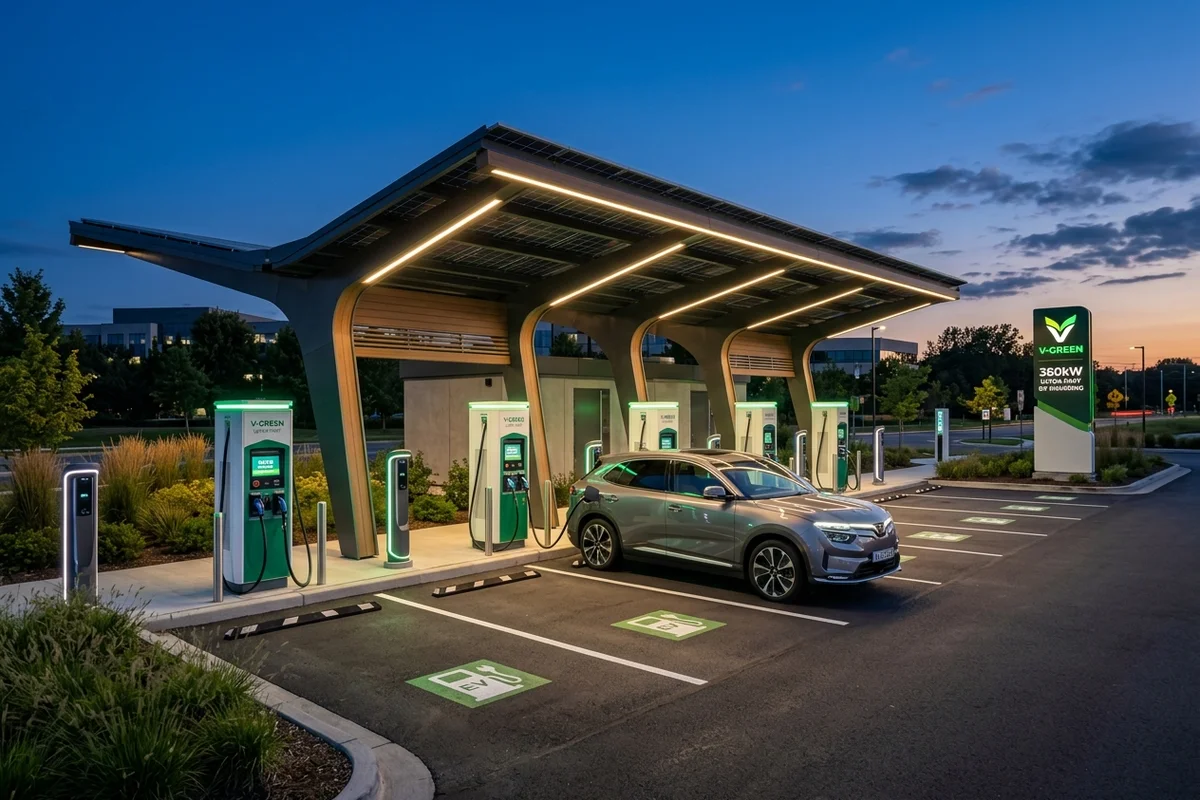
Electric vehicle charging station technologies, battery pack cross-section, and fast charging infrastructure
Key Takeaways
- Market Sizing: The global EV charging infrastructure market has reached $50.3B–$73.9B in 2026, expanding at a 21.2%–27.8% CAGR toward $318B–$548B by 2035.
- Battery Chemistry Divergence: LFP (Lithium Iron Phosphate) dominates urban runabouts (VF 3, VF 5, VF 6) due to fire safety and >3,000 cycle durability, while high-nickel NMC powers highway cruisers (VF 7, VF 8, VF 9) with >250 Wh/kg energy density.
- Solid-State Horizon: ProLogium solid-state ceramic electrolyte partnerships are paving the way for 500+ Wh/kg cells and 12-minute 10-80% ultra-fast charging by 2028-2030.
- Operating Economics: EV charging costs remain 60% to 75% cheaper than equivalent gasoline miles globally, reinforced by V-Green Vietnam free charging through 2029.
Global Market Dynamics: The $300 Billion Charging Infrastructure Race
The global transition to zero-emission transportation has shifted from pure vehicle manufacturing to the critical enabler: charging infrastructure. Industry valuations estimate the global EV charging market at $50.3B to $73.9B in 2026, growing at a robust 21.2% to 27.8% CAGR to exceed $318B to $548B by 2035. The Asia-Pacific region commands between 45% and 68% of total volume, propelled by aggressive nationwide rollouts like V-Green in Vietnam and Southeast Asia, state grids in China, and emerging hubs in India.
Cell Chemistry Decoded: LFP vs NMC vs Solid-State
Modern EV architectures select battery chemistry according to duty cycle and cost envelope:
- Lithium Iron Phosphate (LFP): Utilized in the VF 3 (18.64 kWh), VF 5 (37.23 kWh), and VF 6 (59.6 kWh) via Gotion High-Tech. Zero cobalt or nickel risk, virtually immune to thermal runaway, and delivers 3,000 to 5,000 full charge cycles. Owners can safely charge to 100% SoC every day.
- Nickel Manganese Cobalt (NMC Ternary): Supplied by CATL for the VF 7, VF 8 (87.7 kWh), and VF 9 (123 kWh). Provides energy densities exceeding 250 Wh/kg for 300+ mile highway range. Best charged to 80% SoC for daily commuting to optimize cycle life.
- Solid-State Battery Technology: Joint developments with ProLogium utilize non-combustible ceramic electrolytes, enabling double the volumetric energy density and safe 12-minute 10% to 80% charging.
Charging Protocol Standards: CCS1, CCS2, NACS, and MCS
Regional fragmentation continues to dictate connector hardware across the globe. Vietnam, Europe, and Southeast Asia utilize CCS2 / Type 2, supporting unified three-phase AC up to 22 kW and DC fast charging up to 360 kW. North America is transitioning toward SAE J3400 (NACS), though native CCS1 remains dominant on networks like Electrify America and EVgo. In heavy-duty commercial haulage, the Megawatt Charging System (MCS) rated up to 3.75 MW is entering commercial pilots.
Total Cost of Ownership: Electric vs Gasoline Economics
Across all global markets in 2026, electric mobility delivers staggering fuel cost advantages. In Vietnam, outside the free charging quota through 2029, charging at 3,858 VND/kWh costs roughly 578 VND/km (~$0.023/km), saving over 1,760 VND/km compared to a 7.5L/100km gasoline sedan. In the United States, home charging at off-peak rates ($0.16/kWh) yields ~$0.045/mile compared to $0.14/mile for gasoline.
Final Editorial Verdict
Global EV Battery & Charging Guide (2026)
4.8/ 5.0
The Positives
- ✓Massive $300B+ market runway driven by rising EV adoption across APAC, Europe, and North America
- ✓LFP chemistry provides unmatched battery safety and 10+ year longevity for urban mobility
- ✓V-Green free charging through 2029 delivers the strongest consumer EV incentive in the world
The Trade-offs
- ✗North American NACS adapter transition requires careful hardware and software validation
- ✗Public ultra-fast charging tariffs in the EU and US peak hours can approach parity with efficient hybrids without home charging
Bottom Line: The 2026 electric vehicle landscape is fundamentally an infrastructure race. Manufacturers like VinFast that secure vertically integrated battery supply (Gotion LFP + CATL NMC) and deploy dense, proprietary ultra-fast networks (V-Green 150,000+ ports) hold an unassailable competitive moat against pure-play automakers relying on third-party charging networks.
Structured Data & Specifications Table
| Specification / Metric | Verified Specification | Data Source |
|---|---|---|
| Global EV Charging Market Size (2026) | $50.3 Billion – $73.9 Billion USD | Grand View & Precedence Research 2026 |
| Compound Annual Growth Rate (CAGR) | 21.2% – 27.8% (Projected to $318B–$548B by 2035) | Global Industry Consensus |
| Dominant Regional Share | Asia-Pacific (45%–68% global share) | IEA Global EV Outlook 2026 |
| LFP Battery Cycle Life vs NMC | LFP: 3,000–5,000 cycles | NMC: 1,500–2,000 cycles | Battery Cell Engineering Data |
| DC Fast Charging Peak Standards | 400V Class: 150–250 kW | 800V Class: 350–480 kW | IEC / SAE Charging Standards |
| Benchmark Public Charging Tariff | VN: 3,858 đ/kWh | US: $0.42/kWh | EU: €0.62/kWh | V-Green / EA / Ionity Benchmarks |
Frequently Asked Questions
Q:Should I charge my EV to 100% every day?
It depends on your battery chemistry. If your vehicle uses an LFP battery (such as the VinFast VF 3, VF 5, or VF 6), charging to 100% is actually recommended to calibrate the BMS cell voltage balancing. If your vehicle has an NMC ternary pack (such as the VF 7, VF 8, or VF 9), maintain daily charging at 80% to maximize cell longevity, reserving 100% for long-distance road trips.
Q:How fast can high-power DC chargers charge a modern EV?
Standard 400V-architecture EVs charge from 10% to 70-80% in approximately 25 to 35 minutes on 150 kW to 250 kW chargers. Advanced 800V vehicles can complete 10% to 80% charging in 15 to 18 minutes on 350 kW liquid-cooled dispensers.
Q:What is V-Green’s competitive advantage over regional charging operators?
V-Green combines captive vehicle synergy (Plug & Charge integration with VinFast software), vast land parcel access through Vingroup real estate developments, domestic battery cell production at Ha Tinh, and an unmatched 150,000-port density spanning every province in Vietnam.
Tags:#EV Battery#LFP vs NMC#Solid-State Battery#Fast Charging#EV Infrastructure#Market Potential 2026

Global Supply Chain & Battery Tech Analyst
M.Sc. Energy Supply Chains; B.Tech Materials Engineering; 9+ Years Battery Market Analyst
With nearly a decade of experience analyzing clean energy markets, Ananya translates global raw material trends, cell innovations, and battery supply chains into accessible, forward-looking insights.
Related Stories & Analysis
Ownership & Buyer Guides
11 min readVinFast Car Prices in the US (2026 Lineup): From VF 3 to VF 9, Lease Deals & VFS Stock Overview
Reviews & Road Tests
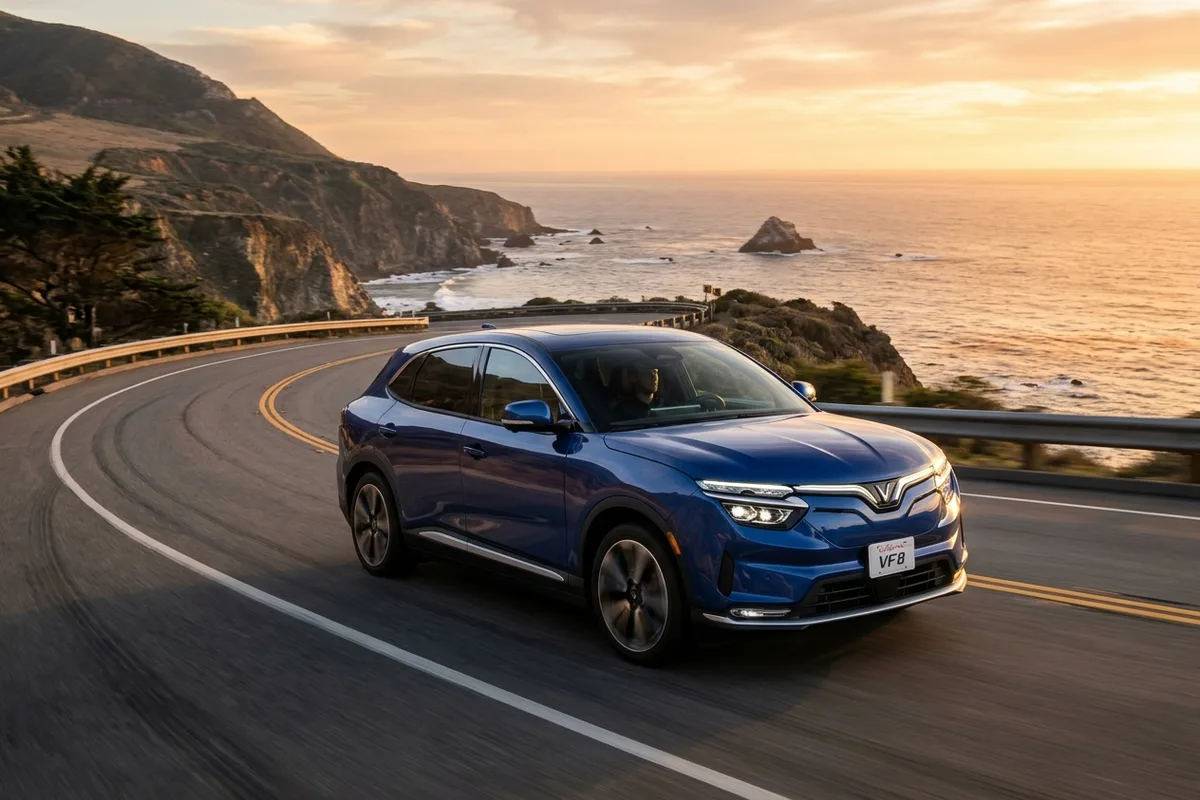
11 min readWho Makes the VinFast VF 8? Origins, Battery Specs, US Pricing & Buyer Guide (2026)
Industry & Manufacturing
10 min read